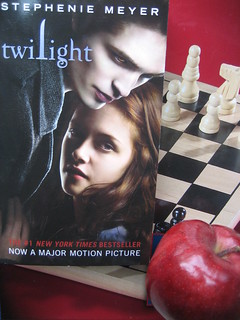
Twilight: What Went Wrong

Love this guest post! Hope you enjoy it, too.


Ok I admit it.  I ate up Stephanie Miller’s adolescent series like, well, an adolescent. They were hardly well written literature. And maybe part of me stuck with it to see if it would get better. And the last part of the 4th book did improve once the story’s focus was off of the melodramatic and pained relationship of Bella and Edward.

Despite all of this, the book was very detailed on character, setting etc.  Anyone making a movie should have zero problem creating the world right? Wrong! Somehow Hollywood managed to ruin something that should have been a no brainer. So how’d they screw it up?

Casting


This was their first and biggest mistake.  The director of the first movie actually had several critically acclaimed films under her belt. If anyone could bring this film to its feet it was her.  Unfortunately, she made a huge mistake in casting.  And don’t get me wrong, the actors (in other projects) have all been pretty good.  I don’t even think Kristen Stewart makes a bad Bella. She brought as much as she could to a weakly written 2-dimensional victimized character.  But I wanted heat and passion between her and Edward. And for some reason Robert Pattinson looked more like he was smelling rotted garbage or in excruciating pain whenever he was around Stewart. They had zero chemistry.  How they ended up dating in real life is a mystery.  Rosalie(a latino actress with bleached blonde hair?), Alice (she’s supposed to be short and pixie-like not 5’7) and Jasper round out the craptastic cast.  The only characters that remotely embodied their literary descriptions were Bella’s father and her plucky friend Jessica.

Direction

While the cast was sealed by the time the second director came on for the second film, I was hoping a new director meant a better film.  Alas, it wasn’t so.  While it was a welcome break from the saga of Bella/Edward to watch her with Jacob (hello chemistry), the film still had to weave its way back to the their predicament.  Part of me secretly wished Edward would walk out into the sun in all his sparkly glory and burst into flames.  But of course (SPOILER) he doesn’t. And with the subsequent films, the direction never seems to put anything real into the film.  The sadness and despair seems forced, the attraction seems false and the only thing exciting is the soundtrack.  Why wouldn’t the director(s) fix the obvious lack of relating in a natural way? It had to be obvious.  I almost wish Tim Burton would have given it a go. Or Tarantino. At least it would have been a visual delight. With more blood.

The Makeup
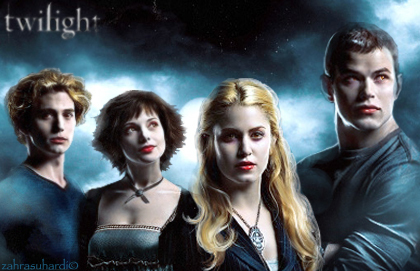

I can accept that the first film had a much smaller budget than the rest.  And that the vampires looked like they dumped their heads in flour (especially Rosalie) was probably due to lack of funds.  And the sparkling- well it was awful.  However, the second film had more money.  The art department should have stepped it up.  Instead, the vampires still looked awful.  And it stayed this way through the next two films.  I can only hope that the last film someone, anyone, said something.  I want my vampire to look like Brad Pitt in Interview With the Vampire or Gary Oldman in Dracula.  Is that too much to ask?

Lisa Coronado is a content writer for Custom Magnets.

The Rise and Fall of Science Fiction on Television

Enjoy this fabulous guest post. I’m one of those nerds who enjoy good science fiction. 🙂


When considering what the future might hold, many people think of science fiction, those fantastical visions that we’ve created of the far-flung future where technology has advanced to a point that seems magical to use. Science Fiction gives people hope in a future. So why exactly has the popularity of Science Fiction based television shows decreased so dramatically in recent years? And what exactly, if anything could be done to stem the tide of science fiction shows, one after another being canned after only a season (or less)?

The Ascent of Science Fiction

To find why science fiction died on television, we need to go back and discover why it initially came into being. During the 1950s and 1960s, the world was enjoying a time of exponential technological development, on a very noticeable level. While this development was prevalent throughout culture, nowhere was it more noticeable than in the space race between the United States and the Soviet Union. This extremely fast expansion outside existing boundaries instilled this massive and overarching belief in the possibility that mankind represented, and spawned television shows like Star Trek, which ended up pushing outside societal boundaries in and of itself.

The Fall

And then, after making it to the moon, our dreams of space as a society collapsed. As funding for space travel further space development shifted to military programs, society as a whole realized that we were not going to be able to sustain this exponential rate of technological development, and people became somewhat cynical about science fiction, forcing a bit of a “recession” in science fiction TV.

Short-lived Resurgence

After a while though, the United States finally went back to space in a big way during the 80s with the Space Shuttle, and sci-fi television exploded back onto the market, with a new Star Trek series, The Next Generation, leading the charge. Science Fiction came back in a huge way to the television market during this period, and at one point they even considered building a full sized starship Enterprise in Las Vegas to act as a tourist attraction.

The death of this wave is actually not directly attributable to real life scientific developments though, and we’re still sitting at the tail end of it. What more or less happened was the genre was just milked dry. So many science fiction television shows were being produced and aired at the same time that the market became saturated to the point at which no one could make an advertising profit.

So how exactly do you bring Science Fiction television back into the forefront? Honestly, I don’t know if it is possible. The few science fiction television shows left that are considered good by critics and the general public, like Fringe, get very mediocre ratings, which, while enough to keep the TV show alive, are not making a huge profit. To realistically bring back Science Fiction TV to television you need to be able to market to people that aren’t your traditional science fiction fans, but by doing that you risk alienating your main market. It’s a very tricky thing to try and do, but to bring back sci-fi television, it needs to be done.

Matthew Warren is a science fiction fan who runs Sci-Fi Stuff a website that offers gifts and collectibles from some of TV’s best science fiction series.

A Tale of Two (Mythical!) Cities

Shamballa

‘Sambhala’ or ‘Shamballa’ as it is sometimes referred to in the West today is a spiritual place, a place mentioned in Buddhist Kalachaklra Tantra texts and claimed to exist in the physical world. Many ideas about where Shamballa and its capital city ‘Kalapa’ were actually located exist but all are focussed around the central Asian area. From near Tibet to South Siberia, the accounts vary widely.

Shamballa is or was ruled over by a King or ‘Kalki’ and its population is said to be made up of only enlightened individuals. Only people who have amassed the right amount of Karma can reach the place. It’s a pure land, a pure Buddhist land, but appears to have its roots in an earlier Hindu myth. It is said that it can be found in outer, inner and alternative states, outer being a physical place, inner being in the mind and one’s self and alternative being reached through meditation.

There have been many attempts in the 20th century to find the physical place of Shamballa but none have been successful. A soviet expedition went to Tibet in 1924 and an expedition was sent on three occasions to Tibet during the 1930’s by the Nazi party to find Aryan links and in turn Shamballa.

The myths of Shamballa have had an influence on the modern world too. Some brands have adopted the word ‘Shamballa’ to describe their products such as the Rocks Shamballa Crystal watches. Shamballa in this sense describes bracelets that contain semi-precious stones which are thought to contain therapeutic attributes. This ties in well with the idea of the place of Shamballa as the practice of Shamballa bracelets like those that make up the Rocks Shamballa Crystal watches have their routes in ancient traditions of meditation and spirituality.

Atlantis

I think it’s okay to say that Atlantis is the most famous mythical city / continent in the world. It is said that throughout history, the story of Atlantis has been considered a myth and that it is only in more modern times that anyone has taken the claims seriously. In recent years Atlantis had received a lot of press. There was the Disney film ‘Atlantis: The Lost Empire’ in 2001 and the possible sighting of the city on Google Ocean in 2009 which featured prominently in many tabloid newspapers. The latter claimed to show a grid structure the size of Wales off of the coast of West Africa.

Atlantis is said to be an island or a group of islands, home to an advanced civilisation that was wiped off of the face of the Earth by an earthquake and subsequent floods nearly 12,000 years ago. Many people have theorised as to the exact location of the mythical city since Plato mentioned it in 360 BC. He said “the pillars of Heracles”, a term referring to the strait between modern day Spain and Morocco with the northern pillar being generally accepted as the Rock of Gibraltar. There is still some dispute as to the identity of the southern pillar however. This would tie in with the theory that the continent was located off of the coast of Africa. A quick Google search of “Atlantis location theories” will throw up a long list of sites that have been theorised and make for a good read.

One of the sites mentioned is Santorini. Santorini an island in the Mediterranean and was hit by a large eruption which devastated the Minoan island and the city of Akrotiri. Much has been learnt of the devastation through archaeological excavations at Akrotiri. It is thought by some that this was in fact Atlantis, whilst others believe that it was served as the inspiration for a myth, started by Plato in his writings.

Citations:

iclikd.com have a great selection of Rocks Shamballa Crystal watches available in a multitude of colours.

Hope you enjoyed this guest post! I think this kind of stuff is fascinating and can always spark an idea for a novel. 🙂

Raymond Briggs: Timeless Stories For Kids And Grown Ups

Hi everyone! Please enjoy this guest post about Raymond Briggs. If you haven’t read his classic stories, they are a must read! I grew up with his books and always feel a bit nostalgic when I think of them. So, without further introductory ramble, enjoy… 


Known for his touching story of The Snowman, and an insightful tale of what Santa Clause does between Christmases, Raymond Briggs is an author and graphic artist who is at the heart of British children’s literature. Back in the 60s and 70s, before illustrated storybooks were called graphic novels, Raymond Briggs began to make a name for himself thanks to a host of extraordinary characters and stories.

Born in 1934, Raymond Briggs had shown a talent for art, particularly cartooning. His father, Ernest, believed art to be a fruitless pursuit. This led young Raymond to make his own way through art school. He did, studying at the Wimbledon School of Art, Central School of Art and Slade School of Fine Art, spending a spell in the military as a draghtsman. With this experience and natural gifts, Briggs began to illustrate children’s books, but his own ability to tell stories soon took over.

Adopting a comic strip style, his first original book was ‘Father Christmas’ about a grumpy Santa Claus, who hated snow and grumbled through the work of delivering presents. This curmudgeonly Father Christmas was a big hit when the book was published in 1973, and a follow up, ‘Father Christmas Goes On Holiday’ was published in 1975.

From Father Christmas to international success

After ‘Father Christmas’, Raymond Briggs unleashed ‘Fungus the Bogeyman’ to instant appeal to young children. With a finger in the nose, clothing held together by dirt and terrible smells, Fungus the Bogeyman was a gross hero for kids. Despite the popularity of Fungus, the artist was just about to experience his biggest success.

Without any words, and a million miles away from the filth and grim of ‘Fungus the Bogeyman’, Raymond Briggs released ‘The Snowman’ in 1982. The reaction was remarkable, as this touching story followed the adventure of a young boy and his snowman for one night. It became an Oscar winning, animated film that is still shown on British TV each year, now a British tradition.

Briggs not only released stories for children, but also tales with serious political messages too. ‘When The Wind Blows’ is such a piece, following the lives of Jim Bloggs and his wife Hilda in the aftermath of a Nuclear bombing and the effects of radiation poisoning. The story is terrible affecting, as these warm and adorable characters face the effects of nuclear fallout.

The artist still works to this day, and his characterful crayon pieces will always be remembered as being part of the backbone of British children’s fiction.

Citations:

I Dream Elephants brings you the best in kids outfits and accessories from brands such as Finger in the Nose clothing.

Creating a Baby Name, Is it Possible?

Hey, enjoy this guest post! I think it applies to coming up with character names as well.


When coming up with the difficult decision of choosing your babies name, it can often lead to big disagreements with your partner and the quest to find that individual name will often to lead to looking at celebrity trends which can often end in children being called Apple or Blue. Wouldn’t it be great however, if you could come up with something totally unique, a name that no other person has ever though about naming their child?

The Twilight Saga

We could take inspiration here from the Twilight saga with Bella joining both her mother and Edward’s mother’s names together to create something truly spectacular. She chose on the name Renesmee, a mix of the names Renee and Esme, but would this be so simple in the non-fiction world? If your mother was called Harriet and your partner’s mother Anne you could make Harrianne, but other examples may be less fortunate. What if you wanted to cross Francesca with Laura, what would you create? Maybe Lauesca? This technique might not be to every ones taste, but it is a simple way of being quite creative and can come up with some humorous results when brainstorming with your partner. On the other hand, maybe you should refrain from telling your partner that this is one option inspired by the teenage novels of Twilight.

The only problem is finding the inspiration to come up with your new name, and to find something that would actually be readable on a class register at your little ones first day at school. Of course we would say that there are far too many Thomas’ and Matthew’s in the world, but there is a reason that these names are so popular, and its because we can picture our babies having those names, and can imagine what type of person we might expect them to be. When picking something entirely new, it can be a shocking and risky situation to put any parent in, due to the problems a child might have at school if they were to be bullied because of their individual name. However, picking something that sounds right and does not look too weird on paper could be gold dust. A little inspiration could also go a long way, you could look towards emotions or senses to pick a name that is personal and special to you.

Making Them Up!

A friend of mine recently named her baby girl Alexandra, a name which has been around for decades and was passed down to her from her mother, who got the name from her grandmother and so on. When mentioning to my friend about the possibility of making up her own baby name she was horrified by the thought of creating something new that would not suit old family traditions. She did however play around with Alexandra’s middle name, and considered the prospect of making her own name up. We played around with names such as Rhilana, Lisnee and Ilsaray, therefore if you are not feeling brave enough to name your child something a bit unusual stick to a middle name, after all if they are not fond of it later in life, they can always leave it out if they so choose. On the other hand, if you come up with something that you love, do not be afraid, after all sticking out of the crowd could be a wonderful blessing to your beautiful new baby.

This article has been written by Rhian who loves finding out about new baby names and the trends that create them.