Warm Bodies Is Not Just Horror

Warm-Bodies-011This weekend I got to see the preview of “Warm Bodies” at one of the Award Preview Screenings held at the Directors Guild of America. It’s partly a family perk having a husband who works in the Film Industry, and partly his duty to review the technical content of all films gaining theatrical release. Warm Bodies is a novel by author Isaac Marion. The book was described as a “zombie romance” by the Seattle Post Intelligencer.
Now we often receive preview screeners from the studios for all of the major releases, but not so much for those films that are low budget straight to distribution.

Why the DGA Protects the Art of Film

You see, each of the Guilds of America protect the art they’ve so keenly developed and challenged over decades. Whether it’s acting, screenwriting, directing or producing, the guilds are a Unionised way of looking after the film arts. Films that achieve the budget to go to theatrical release will end up being reviewed by the committee of members. For those films that don’t get the print and advertising budget (P&A) to get a major theatrical release, the studios have deemed that the box office attraction will unlikely reap back the costs of P&A.
So the studios submit to the Guilds all the films that they want considered for awards. A film that is deemed of low market value to reap back box office costs, may be technically brilliant, but a good story or picture is not enough in itself to win awards.

Why Horror Rarely Wins Awards

Rarely then, do I get to see a preview screener of a horror film. Usually they are straight to distribution release. Often they fall in the low budget category, and because minimum investment has been made on the production value, it stands to reason that there is less technical style and skill involved to determine the attention of Guild Nominations.
Being a horror fan I leapt at the chance to see Warm Bodies. A horror film preview screener? Wow, that’s not been common lately. No doubt Guillermo del Torro’s latest release MaMa will also get the privalidge.

Down to the Review

At first I thought they were going to take the direction that ‘R’ the zombie character whose story we are listening to; was going to be the only zombie affected by an unusual change. I was pleasantly surprised at the U-turn the story took.
And it played cleverly on so many levels. This a film was technically good on many levels, the acting, camera work, lighting, script, etc, and it was an actual relief from most horror films where I put up with disconcerting camera movements and crappy scripts just because of the need for a horror flick.

Corporate Oligarch We Live In

The reason why it was clever: It was communicating about many things, not just the idea of a ‘cure’ but that in a corporate sense we are ignorant of many things. We alienate things outside our oligarch. We victimize ourselves in order to define the protection we need from the outside world.
Here, in this film, I could see takes related to xenophobic racism being cured by education. They cleverly chose to avoid the topic of religion and not bring that into it at all. Aspects of religion would have made the film less impactful. I actually felt choked most of the way through rooting for the struggling zomby – relating to what many people can personally overcome. These points would have been belittled with any introduction of religious symbolism.

A Fight For Tolerance

Of course you can say that organized religion, in the church or whatever your belief system could have been another parallel in the story. But the film was not seeking to find fault with beliefs systems, more so the notion that we can be cured by education and tolerance. Which is the philosophy behind many religions anyway.
There were beautiful points in the film of walls crumbling, not only was this symbolic, but a stark reminder that walls in our society still exist today.
I hope this film does get some awards for it’s combination of clever scripting, deeper than the usual horror story. This is the kind of storytelling that the Film Guilds of America strive to preserve.

@JulianaReedLA on Twitter is actively involved in script development and assisting those with screenplays ready to commit to film with introductions to accredited colleagues in the film industry. If you are looking for guidance, and new to filmmaking, please reach out to her on Google Plus where she’ll be happy to help.

The Largest Promotions In Marketing History

prizeLotteries aside, there have been some rather large prize awards from promotions. You may think of a casino giving away a car or a charity raffling a house, but what are some of the largest competitions and promotions in history? We focus on the business world and the cost of some of the promotions and competitions ever held in an attempt to earn your business.

Expedia And Facebook:

Of course you knew that Facebook had to be brought into the mix. The largest promotion in the history of Facebook and social media for that matter was conducted by Expedia. They held the Expedia Friend Trips Game. It was held as a sweepstakes with the winners creating a virtual plan that they then point to a vacation destination that they can take up to 5 friends to. Also the largest promotion in the history of Expedia, some of the trips were valued at over $100,000 each. An expensive way to earn your business.

Play For A Billion:

Instead of a Harrier Jet, Pepsi decided to partner with ABC Television Network for the largest promotion in television history. Hosted by Damon Wayans, one person was selected for a chance to win $1Million on national television. They were then offered a chance to play for $1Billion. The winners took the $1Million guaranteed money as opposed to playing for the billion. However, this did not stop Pepsi from contracting with Berkshire Hathaway for an insurance policy to cover the $1Billion had someone won. A promotion that Pepsi obviously could not afford.

Supercar Or $150,000 Cash:

In 2012, award winning financial service provider IronFX launched a Supercar or $150,000 Cash competition. This was unlike any other type of live competition in fx trading history. They held a $30,000 demo competition earlier in the year but topped it off with this one by awarding someone 5 times their original challenge winner received. Prior to this, there have been few trading challenges that have come even close. In fact, even The Forex Championship competition only gives out $20,000, and that is for an entire season of trading.

McDonald’s Monopoly:

Couldn’t just leave on McDonald’s and the largest ongoing promotion in restaurant history. Launched in 1987, McDonald’s Monopoly promotion pays out $1Million per competition as a grand prize. The history of the promotion is filled with fraud and funny stories, but you have to admit that they get their money’s worth. This promotion needs little explanation as it is known world-wide, being offered in countries such as the United States, Canada, Germany, Hong Kong, the United Kingdom, France, Portugal, Spain, the Netherlands, Australia, Singapore, Austria, Poland and Switzerland. This is one of the longest running promotions for a fast food chain and is one that will not be topped any time soon.

Crystal Chance is a marketing major at the University of South Carolina. As part of a current class project, she has authored a series of short articles about different promotions throughout history and their effects on company’s bottom lines. She has published numerous articles on the topic with different online websites.

Facts About Digital Book Printing

ereadersFacts about Digital Book Printing

With the rise of the e-reader, it is now possible to carry hundreds or even thousands of books all packed in a device that is smaller than the size of one book. This fact, combined with the relatively low price of digital books ($9.99 or less for many Kindle titles) is making the digital book even more appealing than paper books for many readers.

Authors are taking notice, and a flurry of digital books (or “eBooks”) have been published in the last few years. It is not uncommon for a first-time author to release their book in digital-only form. Many used to do this by simply publishing the content as a .pdf file on their own and selling it as downloadable content from their website. Some still do this today.

But as the Amazon Kindle grew to dominate the e-reader market, authors could see that having a Kindle version of their eBook book available for sale was necessary to compete in the larger marketplace. (The Kindle reader could not read regular .pdf’s.) The self-publisher could easily make use of Amazon’s “Kindle Direct Publishing” or KDP interface, a dashboard allowing users to publish as many titles to the Kindle store on Amazon as they wished, and all for free.

Publishing a Kindle Book

To publish via the Amazon KDP interface, one needs a finished manuscript, a JPG cover image, a concise book description and pricing info. The preferred format for upload for the manuscript is Microsoft Word, but it also does a pretty good job with converting .pdf files into a readable Kindle format.

As for pricing, Amazon grants a hefty 70% royalty to authors on all titles priced between $2.99 and $9.99. This is presumably because they have found this price range to be most desirable to buyers, and they can all but guarantee that the Kindle version will be priced lower than the print version, making the Kindle option very appealing to buyers.

Pricing a Digital Book

For books priced either below $2.99 or above $9.99, the royalty drops to 30%, so it’s clear that it’s in the author’s best interest to go for the 70% royalty option. Because of this, a great number of Kindle books, even newly released, are priced at $9.99.

Digital book printing also allows authors to play around with the length and format of books. With free and simple digital printing, they can publish without the financial and time risk that traditional book publishing has entailed. Some authors choose to publish shorter books or “reports” and price them for 99 cents. Some authors even make their titles free, as a marketing tool.

Of course, if you publish a .pdf and sell it yourself via your own website, whatever you charge for the book will be pure profit for you. However, unless you’re already very well known, your website likely won’t have the marketing klout of the juggernaut that is Amazon.

Digital book printing is definitely the way of the future, and because of it, anyone can try their hand at publishing. It’s been said that “everyone has a book in them.” With digital book printing, it’s now easier than ever to give your books the chance for an audience.

This article was written by Alessandra Macaluso.  Alessandra is an Author, Blogger, Writer and DIY addict who loves to share lifestyle tips and recipes on her personal blog.

Four Fail Stories Of Success

seuss-big_12They say that the greatest rewards cannot be earned without great risk. Many people take big risks on the road to success, only to fail miserably. But nothing ventured is nothing gained. Some of those people who initially fail are discouraged and never try again. Others pick themselves up and turn their biggest failures into their biggest successes. Here are some great stories of success that came from failure.

J.K. Rowling

J.K. Rowling is the author of the Harry Potter series, which is one of the best-selling series of all time. The first of the incredibly popular books was written by Rowling while she was working as a waitress. Making so little, she was on public assistance. She scribbled the ideas for the first book on a napkin, and later turned them into a manuscript that was rejected by at least 12 publishers. It was finally published when the 8-year-old daughter of a CEO requested it. Now J.K. Rowling is one of the most successful and richest authors in history.

Dr. Seuss

Dr. Seuss, real name Theodor Seuss Geisel, is perhaps the most iconic children’s author of all time, but it was a long journey. Dr. Seuss frequently doodled and daydreamed, and people thought he was wasting his time with nonsense. In school, he was voted “Least Likely to Succeed.” In college, a professor actually suggested he drop out of the English department and school in general. When he wrote his first published book, I Saw It on Mulberry Street, it was rejected by 27 different publishers. Finally, he got the chance and proved everyone wrong.

Wolfgang Amadeus Mozart

Wolfgang Amadeus Mozart was a musician who began composing at the age of five-years-old. Now, he is one of the best-known composers all over the world. Unfortunately, during his lifetime Mozart experienced many failures and died without fully experiencing his fame. He didn’t have much support, and Emperor Ferdinand criticized his opera as too noisy and with too many notes. He was fired as a court musician in Salzburg. Mozart’s 600 compositions are considered to be some of the finest ever created, even if he failed to convince others of it during his time.

Albert Einstein

Albert Einstein’s name is practically synonymous with intelligence and genius. When he was young, however, he was considered anything but. Einstein didn’t speak until he was 4-years-old, and he couldn’t read until he was 7-years-old. He was expelled from school, with teachers calling him “mentally slow, unsociable, and adrift forever in foolish dreams.” His parents thought he was “subnormal,” and he wasn’t accepted into the Zurich Polytechnic School he applied to. In the end, Einstein ended up revolutionizing what we know about modern physics, and he was a recipient of the Nobel Prize, one of the most prestigious honors he could ever hope to earn.

There are thousands more examples of people – famous or not – becoming successful after facing defeat or failure. Stories like these really do remind us that anything is possible.

Josh Reynolds is an online review tracking professional who shares encouragement for those who have failed to continue their pursuit of success.

9 Books You Can’t Talk Badly About (Because Their Fans Will Attack You If You Do)

This guest post was contributed by Love Reading; UK based online book suppliers established since 2005.

Some cult reads out there divide opinions and court controversy with their subject matter of feminism, sex or political bias.

Some express the sentiments and attitudes of a time so clearly that whole generations buy into them and others simply attract a huge and passionate following that cannot bear to hear a bad word said about their favorite tome.

Here are ten cult read picks, from feminism to wizardry. Like them or loathe them – just don’t criticize them to their fans or you could be in trouble.

The Female Eunuch, Germaine Greer, 1970

The Female Eunuch

Written over forty years ago, this controversial book remains a talking point in the media today. Greer’s aggressive take on feminism stated that men hate women and that women have been brainwashed into hating themselves. The opinion caused a stir at launch. Her stance came under severe criticism, though it certainly provided its author with a ticket to media stardom.

No Logo, Naomi Klein, 2000

NoLogo

Klein’s examination of the corporations and big brands of the world sparked controversy at publication. Covering issues such as sweat shops and corporate censorship, the book takes aim at some of the world’s most popular brands, including Gap, Microsoft and Nike, examining their methods of communicating with their audience and touching on issues of globalization.

Harry Potter and the Philosopher’s Stone, JK Rowling, 1997

Harry Potter

In this case, fans of the adventures of the young wizard in the making are more likely to burst into tears than attack you, but there is no doubt that Ms Rowling’s creations caused quite a stir and certainly have an enormous and very passionate fan base.

These books are not going to provoke much intellectual debate other than the rights and wrongs of ‘Muggle’ abuse, but there is much to be celebrated within the pages.

The Dice Man, Luke Rhinehart, 1971

The Dice Man

This cult novel follows the life of a cynical psychiatrist who decides to live his entire life by the roll of a dice. The decisions dictated by the dice lead to dark doings and the book covers taboo subjects such as rape, murder and sexual experimentation.

At the time of publication, the novel’s subversive nature caused it to be banned in a number of countries, although this in turn merely served to increase its fan base.

The Beauty Myth, Naomi Wolf, 1991

The Beauty Myth

In contrast to The Female Eunuch, The Beauty Myth expressed a more glamorous approach to feminism. Ms Wolf declared that pressure to be thin de-feminizes women, which is why the author encourages women to love their curves rather than conform to standards set upon them.

Her book highlighted the pressure that magazines put upon women in expressing ‘ideal women’ standards that modern women still measure themselves against despite making greater achievements and taking greater prominence in society. The publication is said to be one of the great feminist books of all times.

Trainspotting, Irving Welsh, 1993

Trainspotting

Painting a rather bleak view of disaffected youth in the 1980s, Trainspotting was the first novel from Scottish writer Welsh. It is actually a collection of short stories, each with similar undertones.

The novel quickly gained a cult following, which was only boosted by its translation to the big screen in 1999 a film that was directed by Danny Boyle. The sequel, Porno and more recently, Skagboys, a prequel of sorts, are less well known.

American Psycho, Brett Easton-Ellis, 1991

American Psycho

This book offers a dark take on Manhattan’s corporate playboys in the late eighties and early nineties. The story reveals the frighteningly gory and murderous activities of the sexually depraved Patrick Bateman, who to the outside world appears to be completely normal.

The book attracted a massive cult following, although some countries found the extreme violence within too controversial for mainstream reading and insisted that it be sold wrapped in cellophane.

The Catcher in the Rye, J. D. Salinger, 1951

Catcher in the Rye

This novel has been quoted as one of the 100 best novels of the 20th Century and, although intended for adults, it was subsequently adopted by youths as a cult read largely due to its content of teenage angst and rebellion.

Controversially for the time of publication, the book is heaving with swearing and sexual references, offering an uncensored view of misspent youth of the fifties.

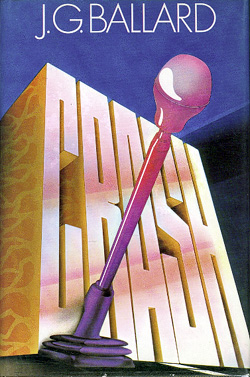
Crash, J. G. Ballard, 1973

Crash

For those who are familiar with Ballard’s semi-autobiographical work, Empire of the Sun, Crash may come as somewhat of a shocker. While Empire of the Sun reflects on a childhood spent in a war-torn world and prison camp, it is the story of a child nonetheless sex and swearing are nowhere to be seen.

Crash, however, reveals the story of a group of sexual fetishists who get their turn-ons from participating in brutal car crashes. Its subject matter caused huge controversy and much criticism, but that didn’t stop it being turned into a film in 1996.

Featured images: